
Chapter III · Build
dagg.ai · 04
Turn the decision into a system that can act.
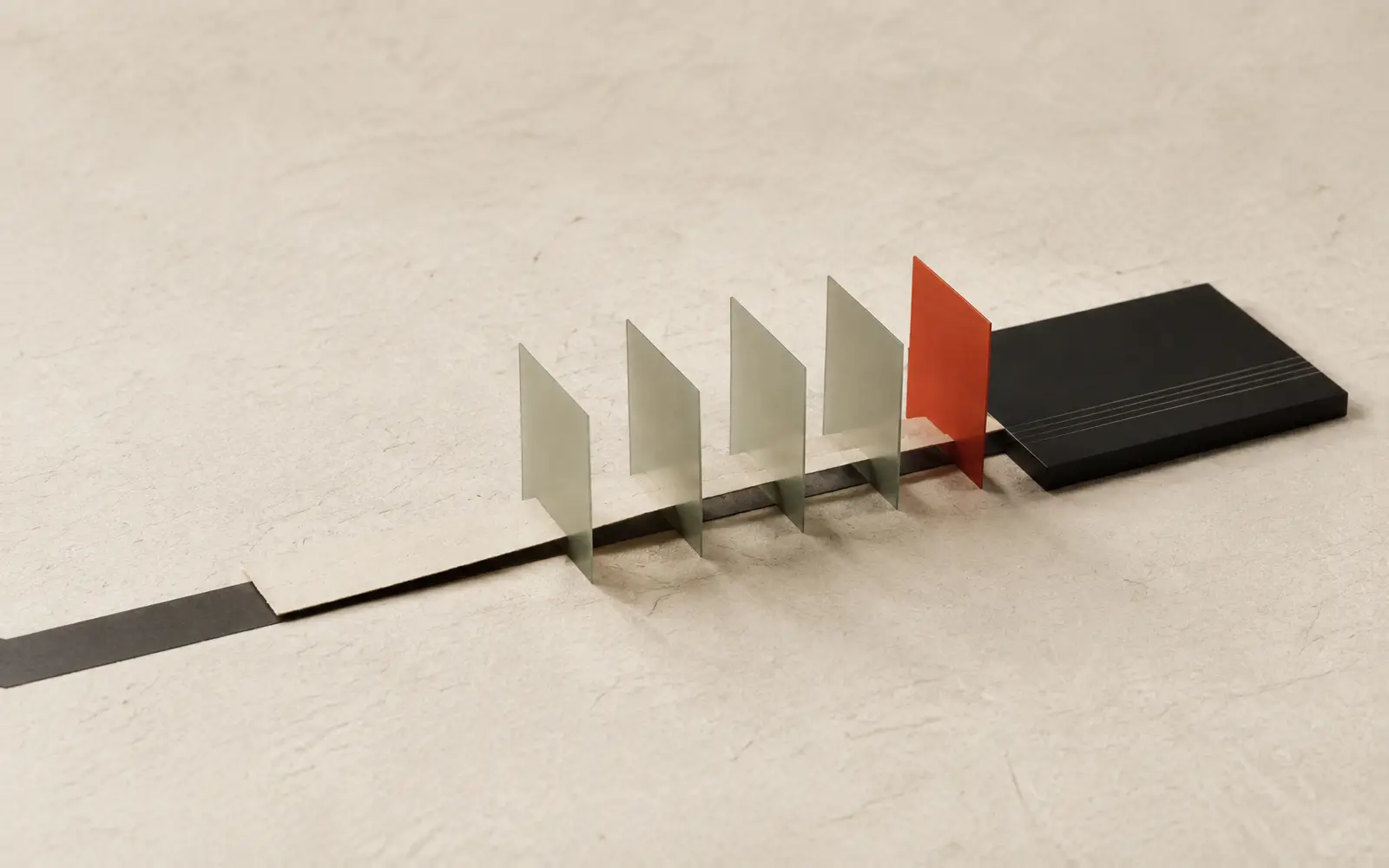
A model can answer. It cannot be trusted to act. What we build around it is what makes action safe, and what survives the next model release: the context it may use, the tools it may call, the permission it may not exceed, the evaluations it must pass, and the person who can stop it. We call that the harness. Every system we ship runs inside one. It is built in a finite pass with two holds, where the pass stops until a person has signed off: one for the product decision, one for release. Every release has a way back, written before the release. We build agents where the system should stay and the manual work around it should go, and custom software where the workflow itself should change, and only with a written case.
Plate IV
The harness, exploded.
Six components around the model, each answering one question a chief executive would ask before letting software act.
Fig. 4 · Six components, one harness. The model is one of six.
Dagg Factory
How a decision becomes a system.
Dagg Factory is how we build. A finite pass, the same for every build, from the record to a released system. Six stages, and people work every one of them. At two of them the pass stops, and nothing continues until a named person has signed off.
- 01 Requirement What the system must do, and must never do, taken from the record.
- 02 Product decisionHold · stops until signed off The pass stops here. A person decides whether this deserves to become a system at all, and what it must never do.
- 03 Architecture Engineers decide which systems it reads, which tools it may use and what it may prepare.
- 04 Build Engineers build it. The company’s context becomes the working context. Agents, or custom software.
- 05 EvaluationHold · stops until signed off The pass stops here. The tests it must pass, including the cases where it must withhold. A person decides whether it may be released.
- 06 Release A named release owner. A way back, written before release.
Every release links back to the record it was built from.
Partnership
The work does not end at release.
Models grow more capable, threats change, the cost and speed of inference move every quarter, and the right level of intelligence for each job is a decision that keeps being made. Some companies run the operation around their AI themselves. Others place it with us. We stay in it either way.
Next · Chapter IV · Control
Nothing acts beyond its permission.
Permission attaches to the action, not the agent. Read, propose, execute, withhold. Stop is a valid product state.